
The Product Page Headline Formula That Beats a PDP
Most Shopify product pages open with a headline that names the category: a moisture wicking shirt, a weighted blanket, a nasal snuff accessory. That is the single costliest line on the page, and fixing it is the fastest conversion rate lever most brands have never pulled. The product page headline formula we use on every rebuild does not describe what the product is. It states what the product replaces.
The product page headline formula, in one line
Most founders write their own headline the way they would describe the product to an investor: accurate, categorized, safe. A visitor does not need the category named, they already know what they clicked on from the ad. What they need to know in the first half second is what changes for them. So the formula is simple to state and hard to apply to your own product, because you know it too well: say what this replaces or makes unnecessary, not what it is.
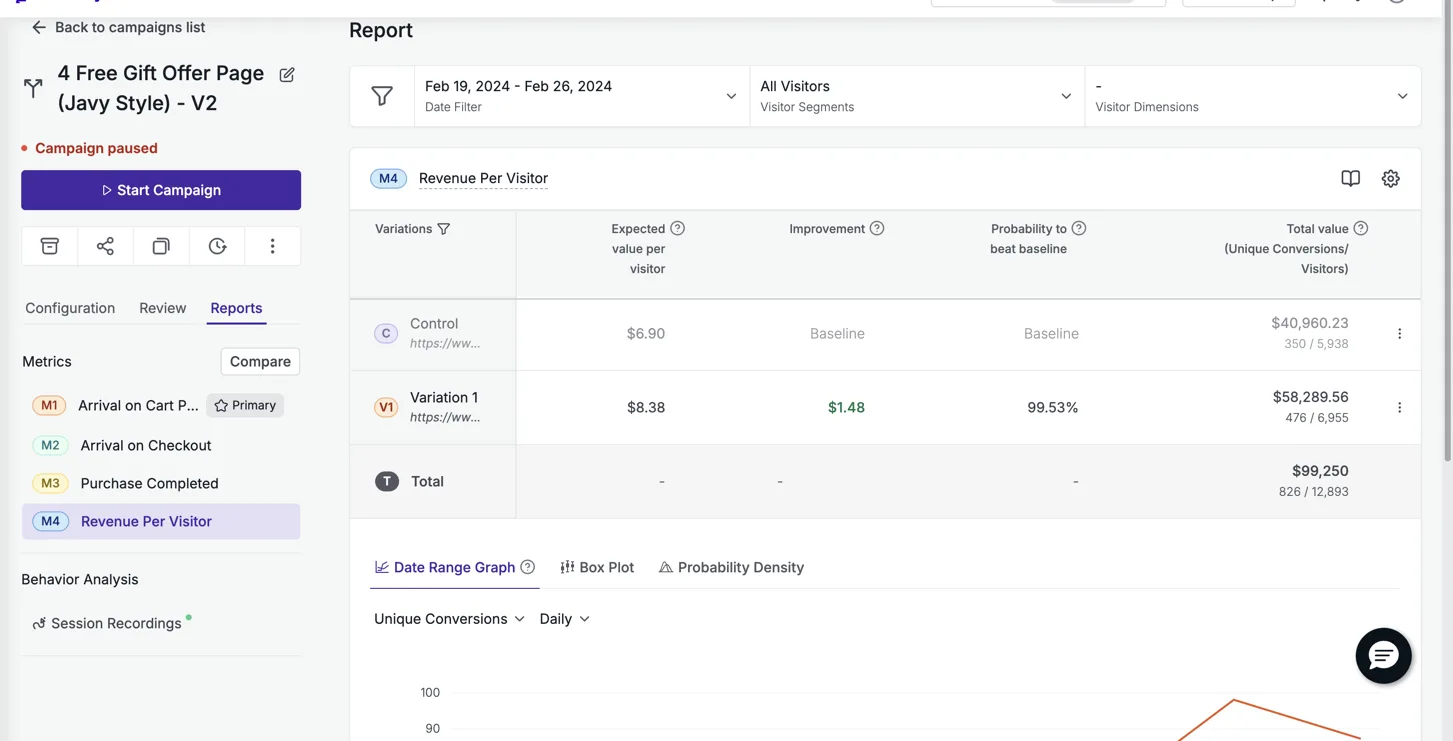
A men’s skincare brand does not need a headline that says face moisturizer. It needs one that says what the moisturizer replaces, a four step routine, a bathroom cabinet full of products that did not work. Particle for Men ran exactly this test, an offer page built around the replacement framing against their own product description page, on VWO, split on their own live traffic. The offer page won by 21.4% in revenue per visitor, at 99.5% confidence across 12,893 visitors, and the page is still live two years later.
Why the category name is dead weight
A category name does two things, and neither helps you. It tells the visitor what shelf you sit on, and it hands them a mental price anchor for that shelf. Neither is the job of a headline on a page someone arrived at from an ad they already clicked. They are past deciding whether they want a product in this category. The question left is whether this purchase is the obviously smart one.
That is a different argument, and it has to be made in the first line, not buried under three paragraphs of description. We put the replacement claim in the headline and the specs below it, not the other way around.
State what it replaces, never what it is. The visitor already knows the category, the headline has one job left.
Reframe the page, not just the line
The reframe formula only works if the rest of the page argues the same case. A headline that says retire your routine followed by a bullet list of ingredients is a headline fighting its own page. Eyewear brand Eiyan Lens tested an offer page built around a full reframe, replacing a home page as the landing destination for Google Ads traffic, against ABConvert. The offer page won by 52% in revenue per visitor.
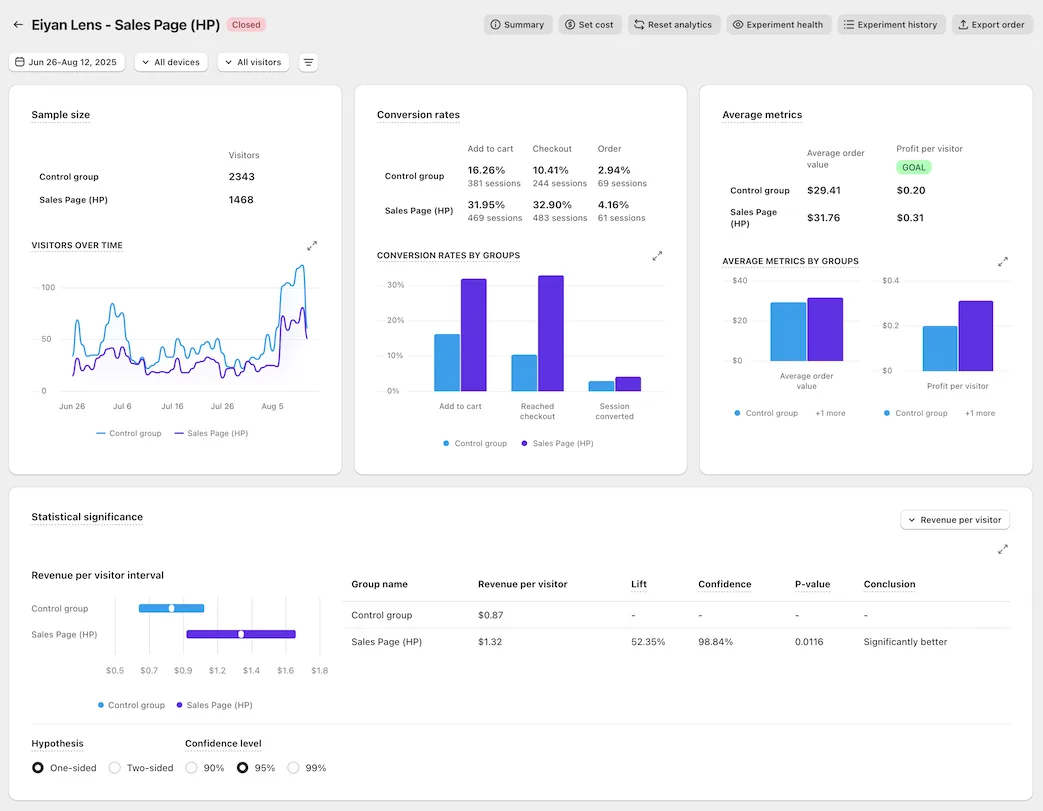
Notice what moved: not a button color, not a headline alone, the entire destination. This is the leverage order we build against every time. What the visitor lands on and what kind of page they land on account for most of the swing. A sharper headline on the wrong page kind is still a smaller lever than landing the right traffic on a page built to argue for the sale instead of describe it.
Pair the reframe with a number it earns
A reframe headline without a number underneath it reads like marketing copy. The formula we lean on next is benefit translation: every spec on the page becomes an outcome, and every outcome gets a number where the brand has one to give. Free the Roots replaced a collection page with an offer page carrying this structure for Meta traffic and won by 33% in revenue per visitor, read in ABConvert. DuraDry ran the same shape, offer page against their own product page, Google Ads traffic, VWO, over a two week window, and the offer page won by 45%.
Neither of those wins came from a cleverer sentence. They came from a page that stated the replacement, then backed it with the specific proof that brand actually had, in the order it mattered. That ordering work is the part of a page most Shopify themes never ask a founder to think about, and it is covered in more depth on our methodology page.
Test it the honest way
The headline reframe is one of the highest leverage things to test on a rebuilt page, alongside the offer structure and the order of the first proof block. Build the page so those three are easy to swap, then read the result the way we read all sixteen of our measured cases: against the brand’s own current page, split on their own live traffic, read from the A/B testing platform rather than from ad platform reported revenue. Direction on a small sample is a direction, not a result, and should be called that until the sample says otherwise.
That is also the shape of our guarantee. We rebuild the page once, test it against the one it replaces, and if conversion rate does not lift by at least 10% in that controlled test, the fee comes back. The full case list, with the testing platform and traffic source named for each one, is on the results page.
See it on your own page.
We rebuild your highest-leverage page and prove the lift on your own live traffic. A 10% lift in conversion rate, or your money back.
Book a call