
Product Page Proof Without a Clinical Trial
Most ecommerce brands do not have a clinical trial, a university study, or a lab report with their name on it, and reaching for one anyway, a vague claim dressed up to sound clinical, is the fastest way to lose a sale a sharp visitor was about to make. Product page proof without a clinical trial is not a weaker version of proof. It is a different stack, built from what the brand actually has, and assembled in the right order it moves conversion rate just as hard.
What to lead with when there is no trial
Start by cataloguing what is actually true about the brand, not what you wish were true. Roughly in order of power: a founder with a real story or credible association, an ambassador roster whose credentials you can name, a scientific or advisory board where the institution does the convincing, third party testing and certifications, volume and rating proof, and verified reviews or video testimonials.
Most brands have two or three of these, not all six. That is fine. The rule is to never manufacture the ones you do not have. No invented review counts, no borrowed certifications, no registry numbers that do not exist. A founder who built the product after their own problem with it, told plainly, beats a vague claim every time, because it is specific and it is true.
Proof is not one block you paste near the buy button. It is a stack, and whatever sits on top should be whichever piece the brand can actually prove, not whichever piece sounds the most impressive.
Product page proof without a clinical trial, in the order it should appear
Placement matters as much as selection. The strongest thing a brand has goes above the fold or in the first scroll, before the visitor has to work for it. Rating and volume proof sit right beside the product title, where the decision is actually happening. Anything deeper, a founder letter, a certification badge, a longer testimonial, earns the middle of the page. And if the proof is genuinely thin, the right move is a shorter page, not a page padded with filler sections pretending to be proof.
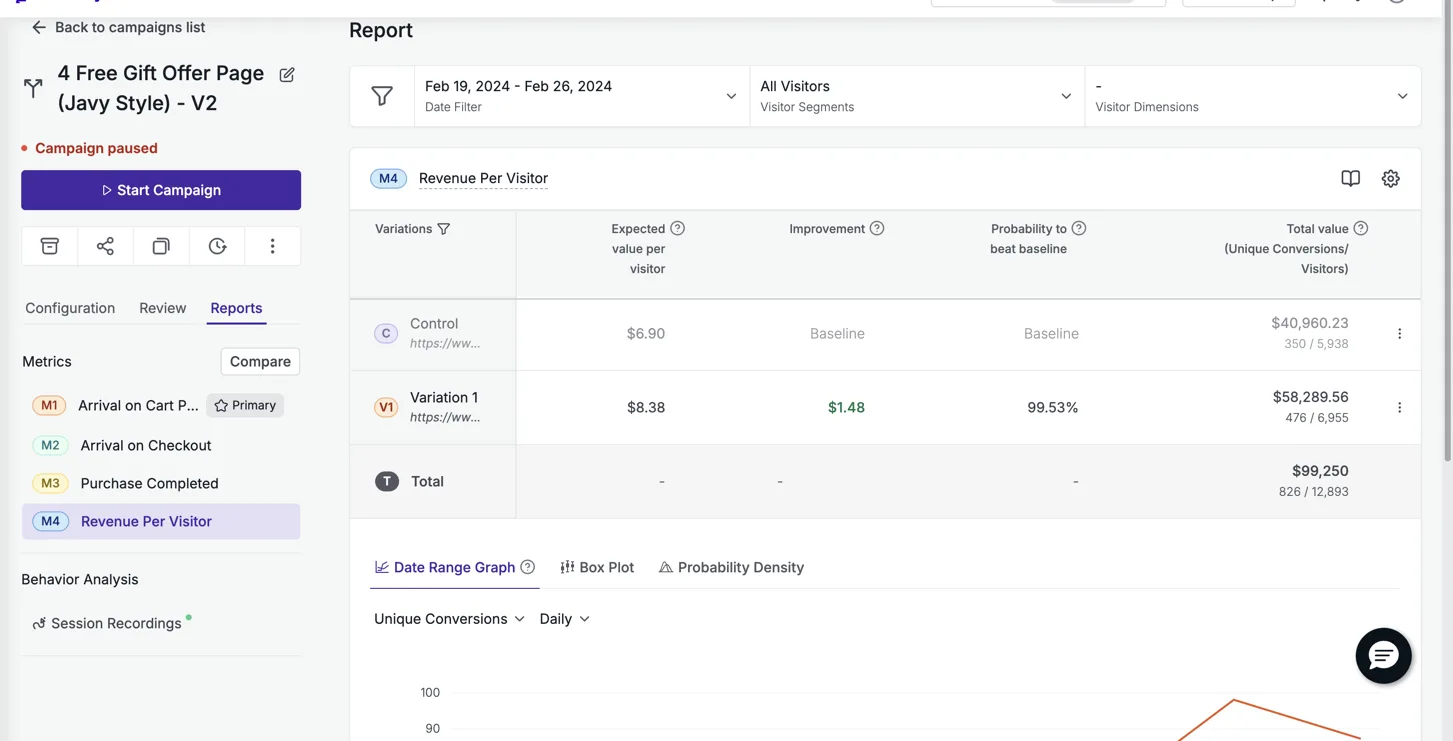
Particle for Men is a clean example. It is a men’s skincare brand with a real founder story and an ambassador presence, and no clinical trial anywhere on the page. We rebuilt it as an offer page and ran it against their existing product page on their own traffic. Revenue per visitor lifted 21.4%, read on VWO at 99.5% confidence across 12,893 visitors, and the page is still live two years later.
Ambassador credentials carry more weight than people assume
An ambassador roster only works as proof if the credentials are real and nameable. “As worn by” with no names attached is decoration, not proof. If the brand genuinely has people with recognizable standing in the category, naming them and saying what they actually do with the product is one of the strongest blocks you can build, stronger than most certifications.
Eiyan Lens is an eyewear brand with that kind of credibility built in. We rebuilt their offer page and tested it against their own home page on Google Ads traffic, read through ABConvert. Revenue per visitor came back up 52%. No clinical trial involved, because eyewear does not need one. The proof that mattered was credibility, named and specific.
Verified reviews, when that is the whole stack
Some brands genuinely have nothing above verified reviews and ratings. That is still real proof, it just has to be handled honestly. The volume has to be true, the rating has to be true, and if there are no video testimonials yet, the section does not get invented ones.
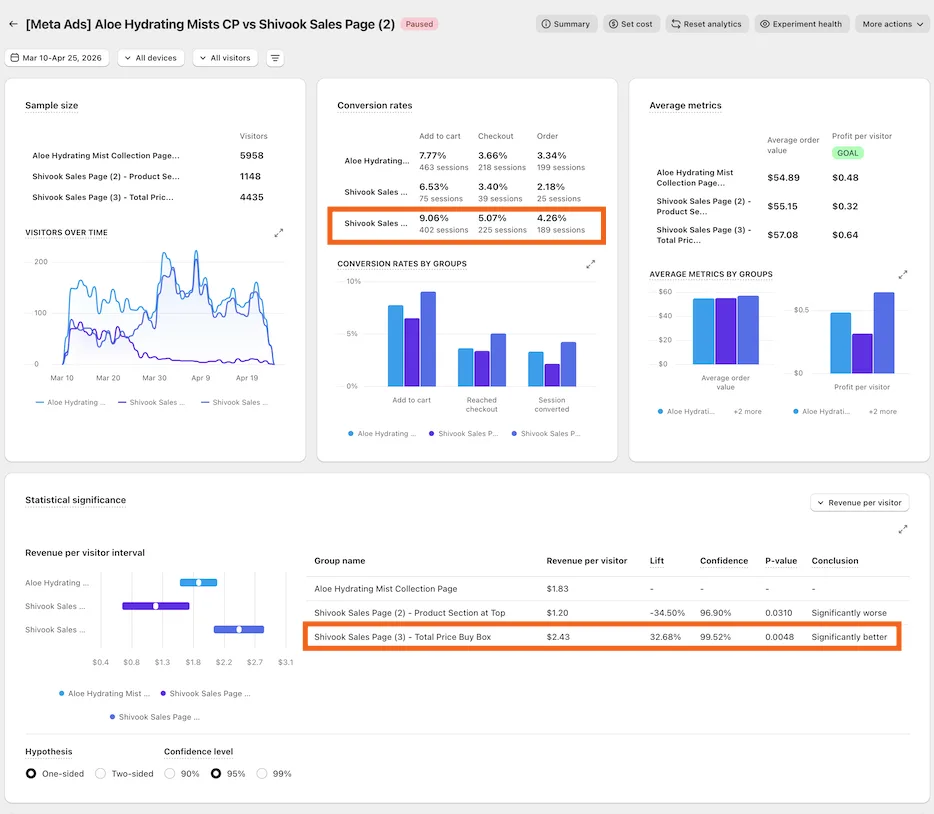
Free the Roots, a natural hair care brand, is a case where review and ingredient transparency carried the page rather than a trial or an ambassador list. We rebuilt it as an offer page against their existing collection page on Meta traffic, read through ABConvert, and revenue per visitor moved up 33%. The lesson is not that reviews are a lesser tier of proof. It is that whatever proof is real, placed correctly, does the job a fabricated trial never could, because a visitor can tell the difference between specific and generic within a few seconds.
The guard that keeps a conversion rate win honest
A page can lift conversion rate by pushing a cheaper option forward or by leaning on a discount, and the page wins on the metric while the business makes less per order. That is why every rebuild we publish is also read in revenue per visitor, total revenue divided by total visitors, which holds conversion rate and average order value at once. If conversion rate climbs and revenue per visitor falls, the page lost, no matter what the headline number says.
That is also why every number on this page is revenue per visitor, never ad platform reported revenue, which attributes generously and cannot see what the page actually did. It is the same discipline whether the proof underneath is a clinical trial or a founder story: measure the thing that cannot be gamed, on the brand’s own traffic, against their own current page.
The full board of measured results, with the proof stack each page actually used, is on /results. If you want to see what a rebuild looks like against your own current page, with the same guarantee behind it, that starts at /guarantee.
See it on your own page.
We rebuild your highest-leverage page and prove the lift on your own live traffic. A 10% lift in conversion rate, or your money back.
Book a call