
Meta Ads vs Google Ads Landing Page Conversion Rate
Ask a media buyer whether Google Ads or Meta traffic converts better on a landing page and you will get a strong opinion and no data behind it. The honest answer, from what we can actually measure, is that the meta ads vs google ads landing page conversion rate question is mostly the wrong question to be asking. The page logic that wins on Google traffic is the same page logic that wins on Meta traffic. The platform changes who shows up. It does not change what makes them buy.
The meta ads vs google ads landing page conversion rate question, answered
We have run controlled tests on both, on the same kind of change. On Google Ads traffic, Eiyan Lens, an eyewear brand, sent clicks to an offer page instead of their home page and revenue per visitor went up 52%, measured through ABConvert. On Meta traffic, Free the Roots, a natural hair care brand, sent clicks to an offer page instead of a collection page and revenue per visitor went up 33%, also read through ABConvert. Different platform, different traffic temperature, same shape of result. Replace the page the ad lands on with a page built to argue for the purchase, and revenue per visitor moves.
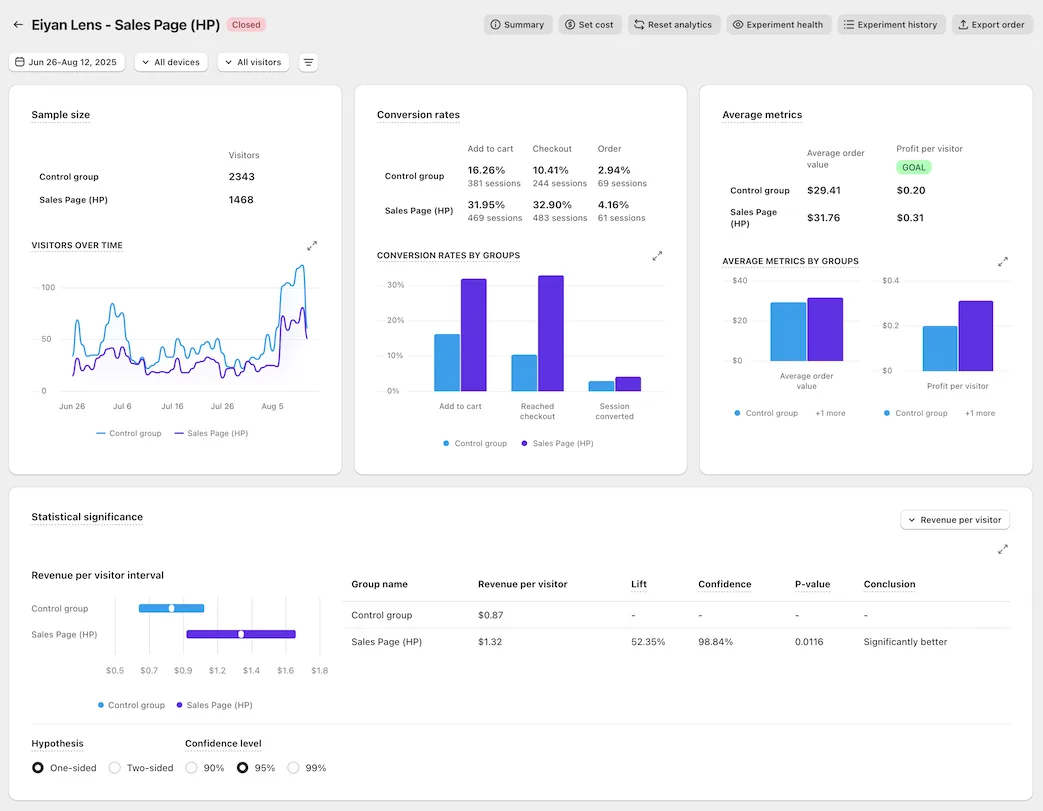
Google traffic tends to arrive already searching. Meta traffic tends to arrive already scrolling. That difference changes what the ad itself has to do. It barely changes what the landing page has to do once the click lands.
Why the platform is a smaller lever than people think
There is an order of operations to a page win, and platform sits low on it. What the visitor lands on matters more than where they came from. An ad for one product that lands on a home page or a broad collection makes the visitor do the work of finding what they came for, and most will not bother, whether that visitor arrived through a search or a scroll. What kind of page it is comes next. A product page describes a product. An offer page argues for buying it right now. That distinction outweighs the traffic source every time we have measured it.
DuraDry, a sweat care brand, ran an offer page against their own PDP on Google Ads traffic through VWO and saw revenue per visitor go up 45% over a two week test. Legendary Car Care ran the same structure, offer page against PDP, on Meta traffic through ABConvert, and saw revenue per visitor go up 32%. The traffic source is different. The lever pulled is identical.
The mistake is treating the ad platform as the variable that decides the page. It decides the audience. The page decides the result.
What actually holds constant
A few things do not move regardless of which platform sent the click:
- Revenue per visitor is the only honest scoreboard. It contains conversion rate and average order value at once, so a discount cannot fake a win. A page that lifts conversion rate while dragging revenue per visitor down has lost, on Google traffic or Meta traffic alike.
- The offer architecture does the heaviest lifting on consumable and subscription products. Tiered choice with a decoy option, unit economics shown beside every tier, a genuine anchor price. None of that is platform specific.
- Proof gets ranked, not dumped. Whatever the brand actually has, real reviews, a founder story, third party testing, gets ordered strongest first and placed where the eye already is. A cold Google click and a cold Meta click both need to see the strongest proof before they need to see the fifth strongest.
Gum of Gods, a functional gum brand, tested our offer page against their own offer page on Meta traffic and saw revenue per visitor go up 97%. That is not a platform effect. That is the difference between an offer page that follows the leverage order above and one that does not.
The one place platform genuinely matters
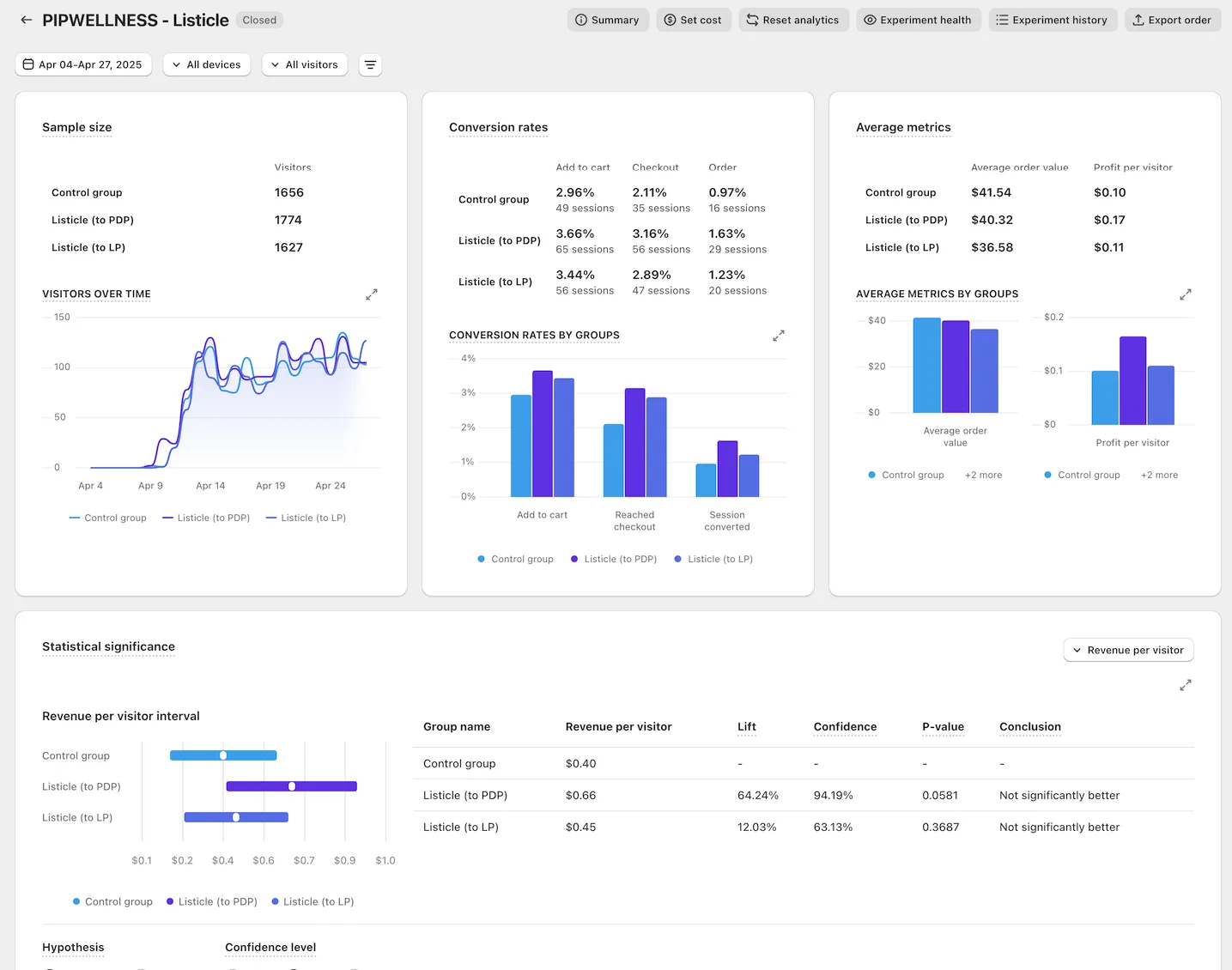
It is not nothing. PIP Wellness, an intimate wellness brand, tested a listicle style page against a control on Meta traffic and moved revenue per visitor from $0.40 to $0.66, a 64% lift. That format choice, a listicle bridge before the offer, tends to fit cold Meta scroll traffic better than it fits Google traffic that already typed in intent. So the platform can shape which page format earns the click. It still does not change the underlying rules once the visitor is on the page: match the page to the product, build the offer properly, rank the proof honestly.
Where this leaves a media buyer
Stop asking whether Meta or Google converts better on the landing page and start asking whether the page matches the product and the offer. We have worked with 400+ ecommerce brands across both channels, and the small set of controlled tests we can point to, the ones on /results, split across both platforms with the same pattern each time. If your page has never been tested against a real alternative on your own traffic, that is the actual gap, not which ad platform is sending the clicks. The /guarantee on a rebuild is a 10% lift in revenue per visitor in a controlled test or your money back, and it applies the same whether the traffic is coming from Google or Meta.
See it on your own page.
We rebuild your highest-leverage page and prove the lift on your own live traffic. A 10% lift in conversion rate, or your money back.
Book a call