
How to Price a Product Page So It Feels Like a Deal
Most founders can tell you exactly what their product page costs to run, but not how to price a product page so it feels like a deal instead of a demand. That gap costs more revenue per visitor than almost anything else sitting on the page.
How to price a product page so it feels like a deal
The mechanism is simple to state and rare to see done well. Before you show the price, you itemize everything the customer would have to buy, book, or figure out on their own to get the same result the offer gives them in one purchase. Total that list. Then reveal the price, and let the gap between the total and the price do the persuading.
This is not a discount trick. A discount says we lowered our number. A cost replacement anchor says here is what this actually replaces, and here is what all of that would have cost separately. The second claim survives scrutiny because it is not about your margin, it is about the customer’s alternative.
Why the anchor has to come before the price
Order matters more here than almost anywhere else on the page. If the price appears first, the reader evaluates it against whatever number is already in their head, usually a competitor’s price or their last purchase in the category. If the itemized list appears first, they evaluate the price against a number you built for them, one that is larger and entirely fair because every line in it is real.
This only works when the itemization is honest. Every line has to be a genuine substitute the customer would otherwise need: the separate products they would buy to approximate the result, the service they would pay for, the trial and error they would absorb getting there alone. Invented line items are the first thing a skeptical reader spots, and a caught invention costs more trust than the rest of the page can win back.
Where this shows up in our case results
We do not run pricing in isolation. The pages that beat a brand’s own product page combine the offer architecture, an itemized value stack, and a proof section that earns the claim, and pricing is one piece of that stack. Our own method calls this stacking value rather than only discounting, and the strongest version always shows unit economics beside the total, because a large number shrinks the moment you divide it.
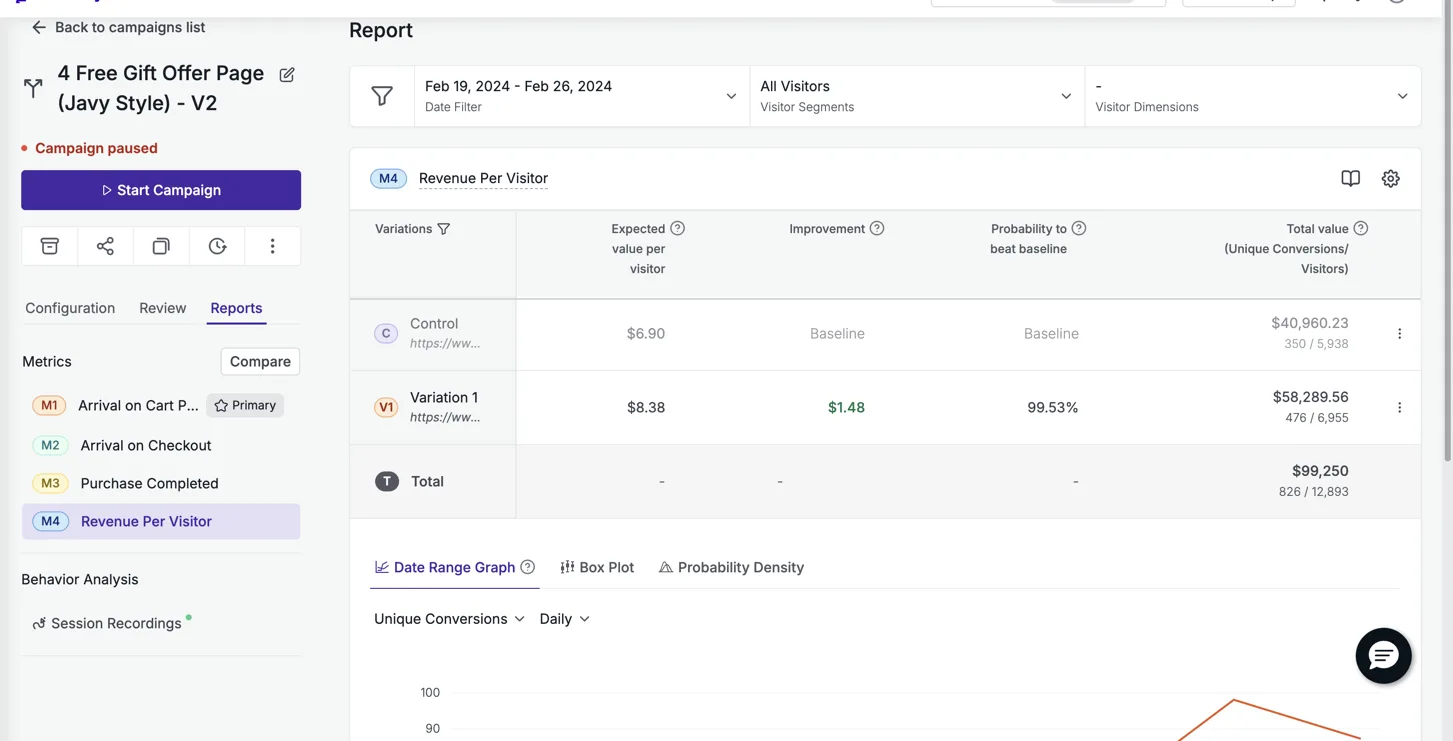
Particle for Men rebuilt its product page into an offer page and beat its own PDP by 21.4% revenue per visitor, at 99.5% confidence across 12,893 visitors on VWO. That page is still live two years later, which tells you the lift held, it was not a fluke of one traffic burst.
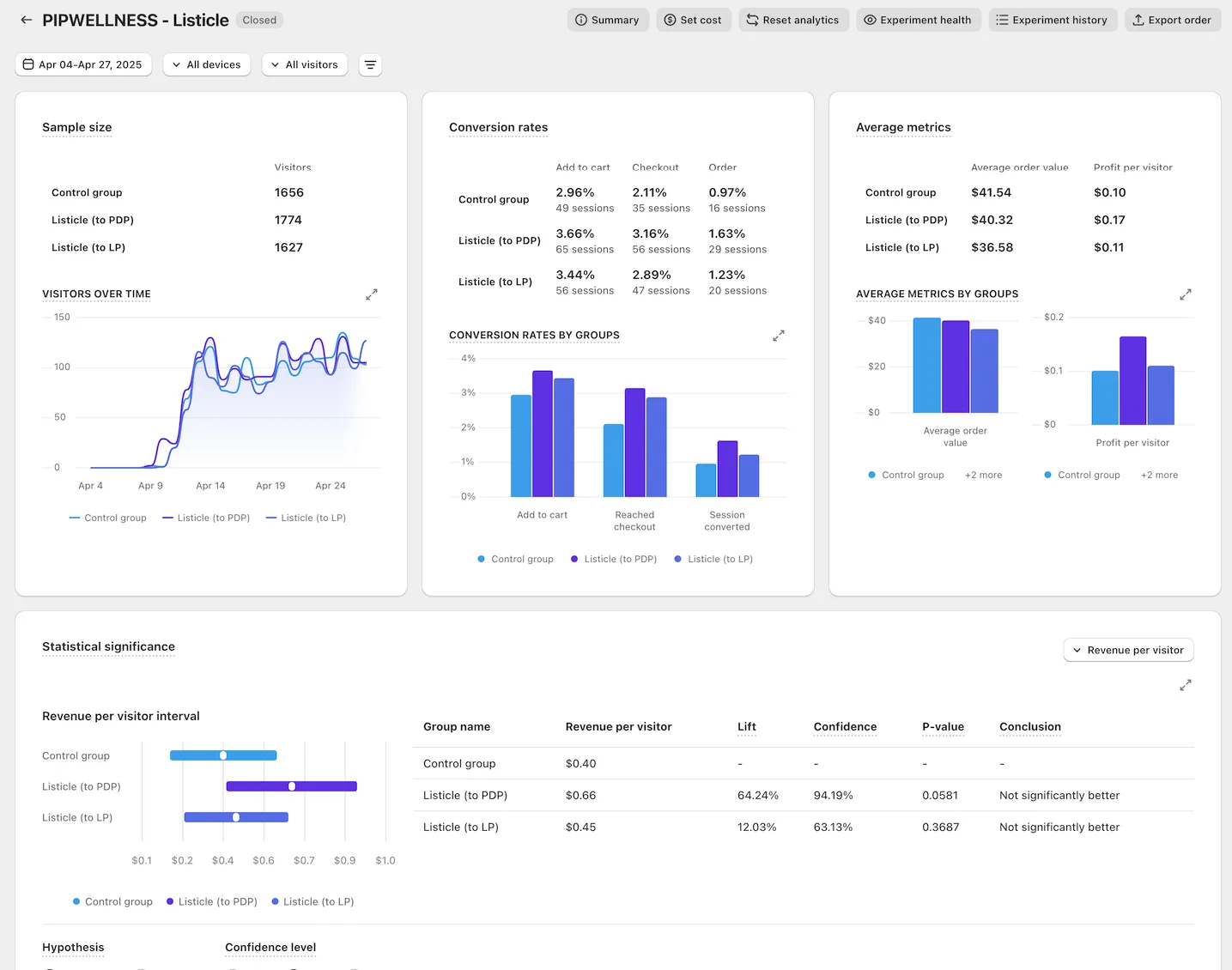
PIP Wellness ran a listicle format against its own PDP as the control and moved revenue per visitor from $0.40 to $0.66, a 64% lift, on Meta traffic read through ABConvert. A listicle format is a natural home for a cost replacement block, because the format is already built around laying out options and totaling what each one costs.
What most pages get wrong when they try this
Most attempts at a value stack fail for one of two reasons, and neither is a copywriting problem.
- They anchor against a struck through price that was never real. A reference price has to be genuine or the whole block reads as a manufactured discount the moment a reader checks it against the brand’s own history.
- They stack the value but never show the math. Listing five things is not the same as adding their prices and showing the total against what the customer actually pays. The subtraction is the persuasion, and skipping it leaves the reader to do arithmetic they usually will not finish.
The anchor is not the discount. The anchor is the honest total of what the customer would have paid to get here without you, and the price is what closes the gap.
Where this technique does not apply
Not every product benefits from this. A single, simple product with no natural substitutes to itemize will strain to produce a credible list, and a strained list is worse than none. This is why the order of levers matters before the copy formula does: what the visitor lands on and what kind of page it is will move revenue more than any single formula, cost replacement anchoring included. It earns its place on consumable, subscription, and bundle offers where a real alternative path genuinely exists and can be priced.
If you want to see the full range of what beat a brand’s own page and on what traffic, the case results are on /results, each one read from the testing platform rather than an ad account. And if you want to know exactly what we guarantee before we touch your page, that is laid out plainly on /guarantee.
See it on your own page.
We rebuild your highest-leverage page and prove the lift on your own live traffic. A 10% lift in conversion rate, or your money back.
Book a call