
Features vs Benefits Product Page Copy That Actually Sells
Most product pages read like a spec sheet because most product pages were written by someone staring at a spec sheet. The founder knows the ingredient list, the material, the certification, the wattage, and they assume the buyer wants that same list. The buyer does not. The buyer wants to know what changes for them if they hit Add to Cart, and a page that never answers that question is asking to lose.
This is the single most common mistake we find when we open a brand’s product page for the first time, and it applies whether the product is a supplement, a skincare bottle, or a car care kit. It is also one of the cheapest things to fix, because the fix is not new proof or a new design. It is translation. Getting features vs benefits product page copy right just means rewriting the same facts in the order your buyer actually thinks in.
What a spec sheet does to a buyer’s attention
A feature is a fact about the product. A benefit is what that fact does for the person reading it. “12,000 RPM sonic motor” is a feature. “Clean enough that your dentist stops mentioning your gums” is a benefit. The first sentence requires the reader to do the math themselves, translating a number they have no reference point for into a reason to care. Most readers will not do that math. They will keep scrolling, and on cold traffic from an ad, scrolling past the first screen without a reason to stay is the whole ballgame lost.
This is not a copywriting nicety. It is the difference between a page that describes a product and a page that argues for buying it, and that distinction is the largest lever in the whole rebuild, bigger than layout, bigger than button color, bigger than almost anything else you can touch on the page itself.
The benefit translation formula
The fix is mechanical enough to run on every line of your product description today. For every spec, ingredient, or number on the page, ask one question: what does this let the buyer do, feel, skip, or avoid that they could not before. Then write the answer next to the fact, never instead of it. Buyers who want the spec should still find it. The benefit is what earns them the click before they go looking.
A few shapes this takes in practice:
- A dose or concentration number becomes a statement about how fast or how noticeably it works.
- An ingredient name becomes what that ingredient does inside the routine the buyer already has.
- A material or construction detail becomes how long it lasts or what it protects against.
- A certification becomes a reason to trust the claim without reading the study yourself.
None of this requires inventing anything. It requires sitting with each fact until you can finish the sentence “which means you…”
Why this is where the largest wins live
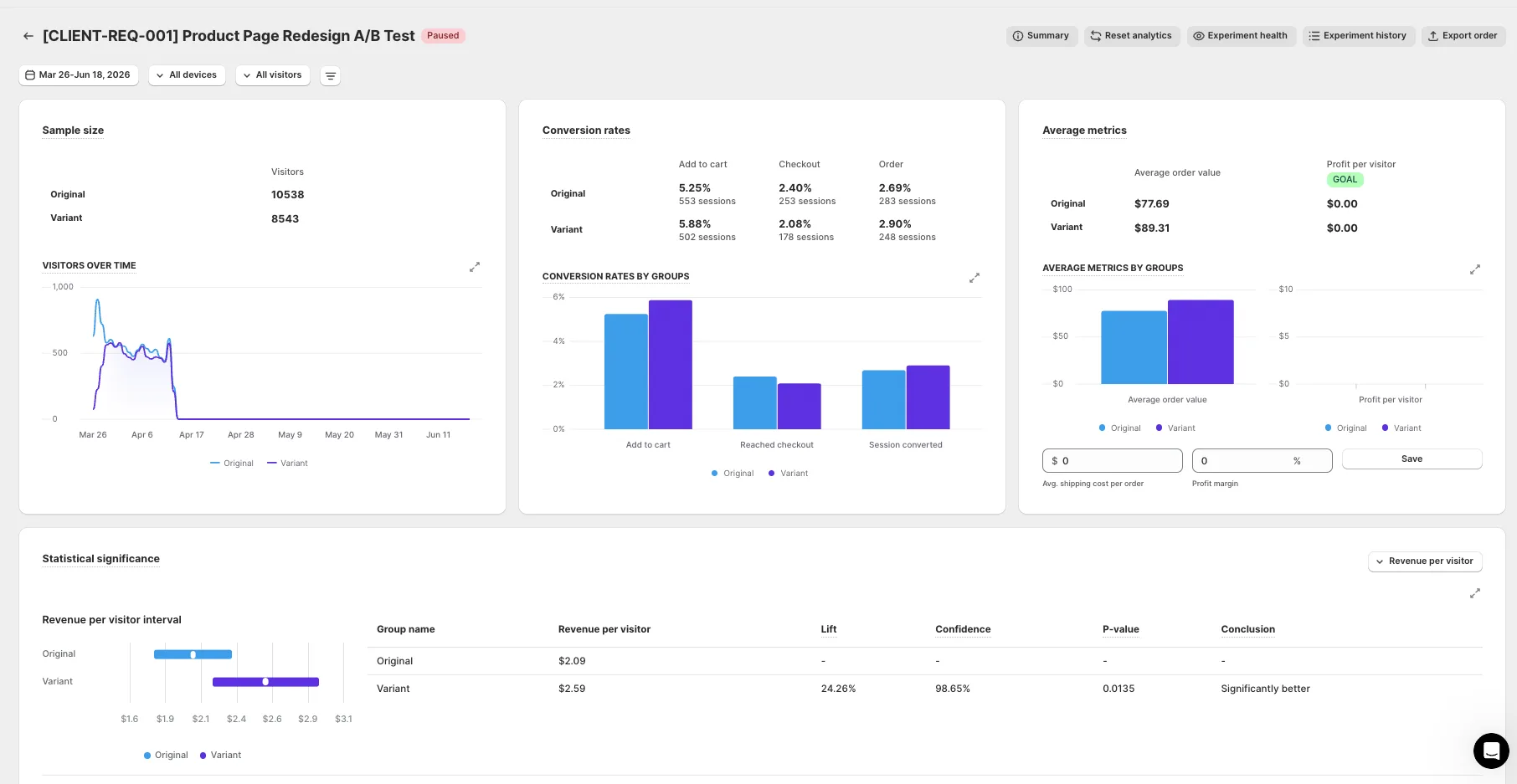
Benefit translation is one formula inside a bigger rebuild, and it rarely works alone. The largest revenue per visitor gains we have measured come from rebuilding the whole page around an offer, not from swapping sentences on an existing layout. When we rebuilt Sonic Brush’s oral care product page against their original, the new page beat it by 24% in revenue per visitor on Google Ads traffic, measured through ABConvert. The copy translated every spec into what it meant for the buyer’s mouth, but it did that inside a page that also reordered the proof, restructured the offer, and gave the visitor a reason to buy now instead of bookmarking for later.
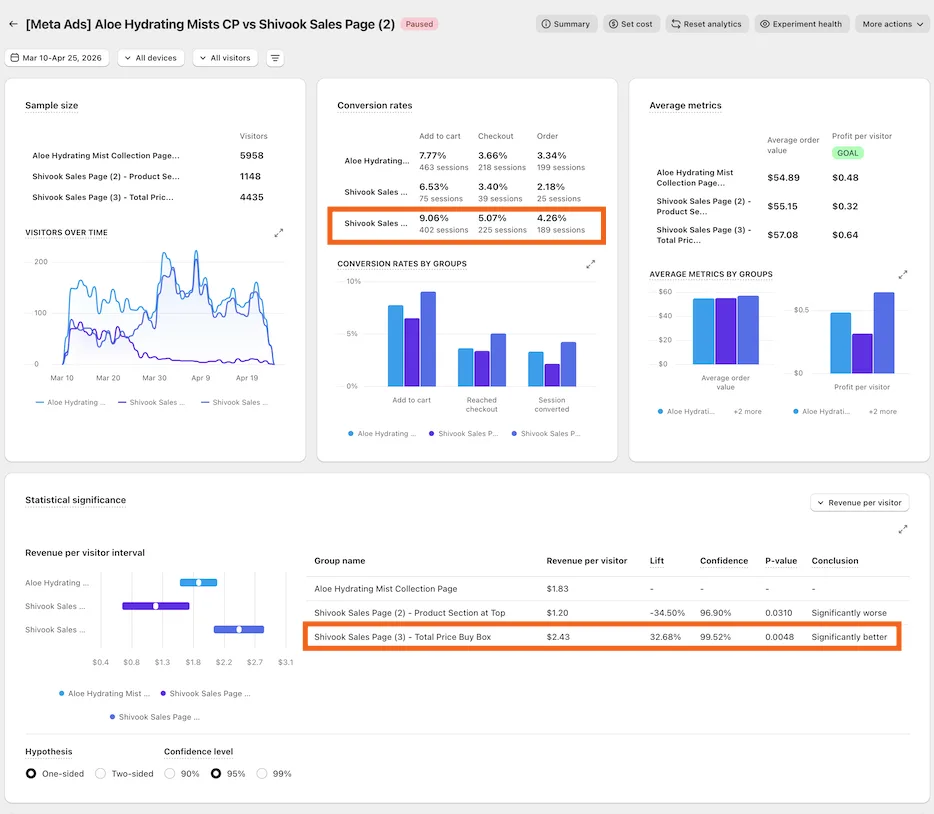
Free the Roots is the cleaner isolated case for what translation alone does to trust. Their natural hair care ingredients read like a lab report on the original page. When we rebuilt the offer page and paired every ingredient with what it actually did in the routine, the new page beat their collection page by 33% in revenue per visitor on Meta traffic, measured in ABConvert. The ingredients did not change. What they meant to the reader did.
The trap: translating into a claim you cannot back
There is a failure mode on the other side of this fix, and it is worse than the spec sheet. A benefit statement is a promise, and a promise with no proof behind it reads as marketing noise the moment a skeptical buyer hits it. If you rewrite “12,000 RPM” as “the cleanest your teeth have ever felt” with nothing supporting that claim, you have swapped one weak sentence for a louder, equally weak one.
The rule is simple: a benefit earns its place on the page only if something on the page can back it. A number, a review, a before and after, a certification. Translation without proof is just a bigger promise with the same amount of trust behind it.
This is why benefit translation and the proof stack get built together, never separately. Rank what proof you actually have honestly, then let the strongest piece sit closest to the boldest benefit claim it supports. A benefit sentence next to a real number reads as confidence. The same sentence next to nothing reads as hope.
How to check your own page for this today
Print your product description and a highlighter. Go line by line. Highlight anything that is purely a fact about the product with no stated consequence for the reader, then rewrite each one by finishing “which means you.” If a fact cannot finish that sentence honestly, it either needs proof to support the benefit it implies, or it belongs in a spec accordion further down the page rather than in the first screen a cold visitor sees.
This single pass will not rebuild your offer or fix a weak proof stack, but it is the fastest, cheapest edit on the page, and it is the one most founders skip because they already know what their ingredients do. Your buyer does not know yet. That is the whole job of the page.
If you want to see what a full rebuild looks like when the offer, the proof, and the copy are all pulling in the same direction, the results are public at /results. And if you would rather have us run this pass on your own page, the offer is one flat fee with a 10% revenue per visitor guarantee, or your money back, detailed at /guarantee.
See it on your own page.
We rebuild your highest-leverage page and prove the lift on your own live traffic. A 10% lift in conversion rate, or your money back.
Book a call